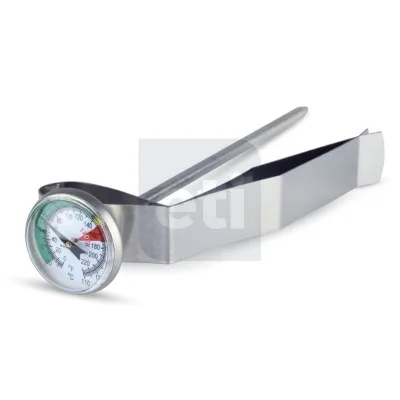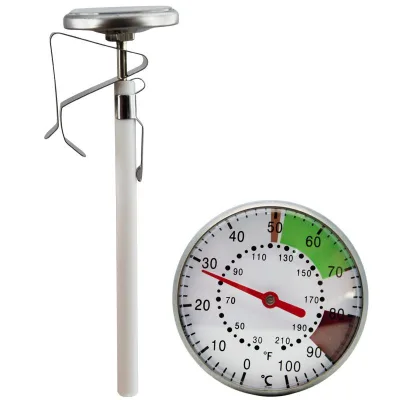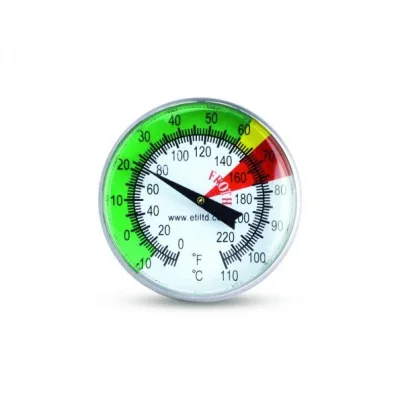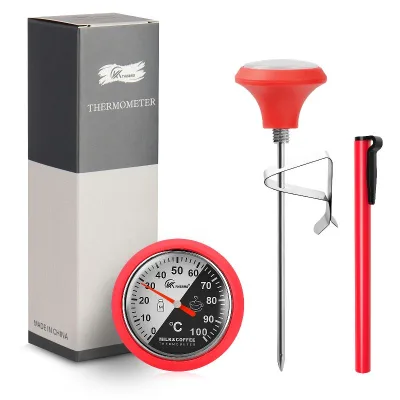
Milk And Coffee Thermometer, Dial Thermometer, 0°C to 100°C
KSh 1,900
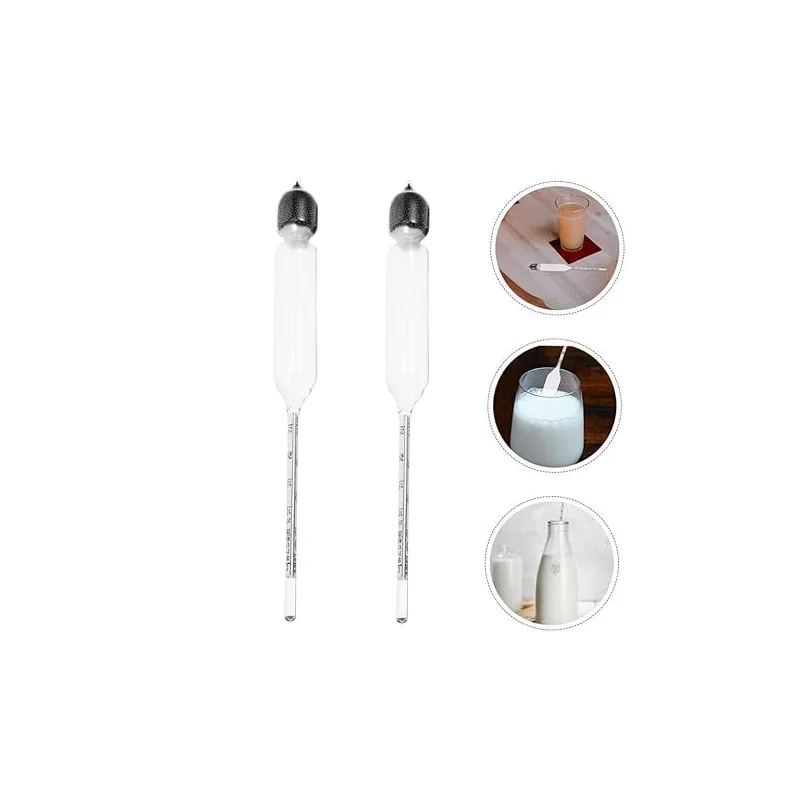
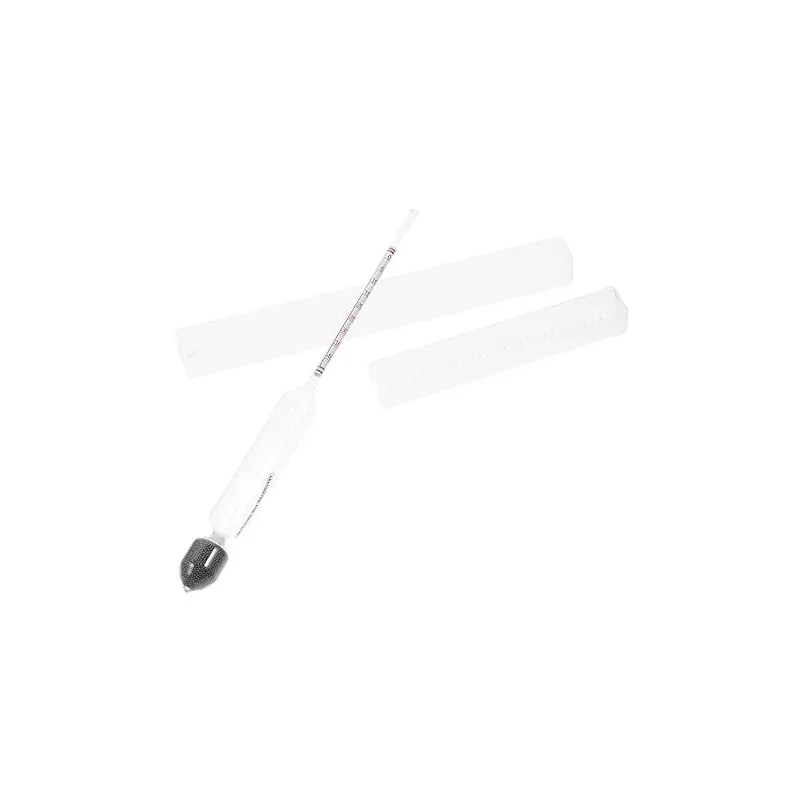
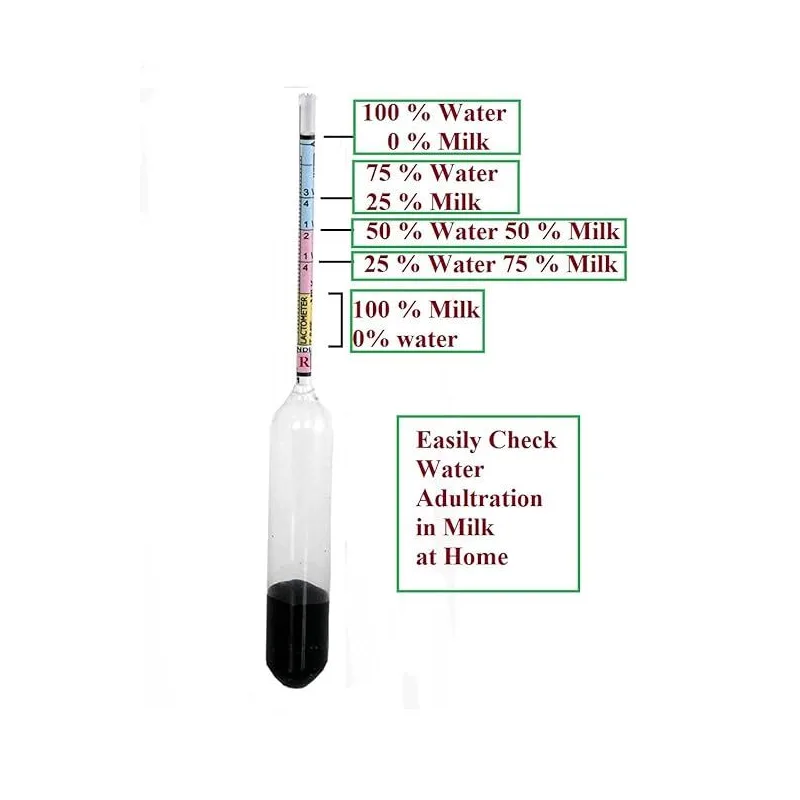

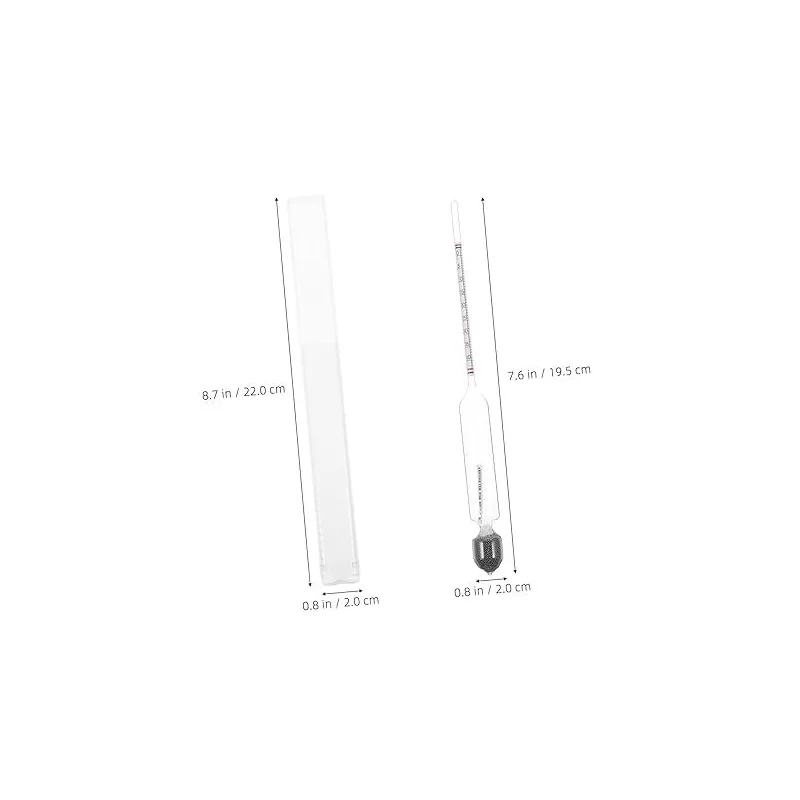
Thermometers and hygrometers Ref. 022-20426
BrandWQ
This is the price you pay. We call you to confirm the order and arrange the delivery.
Questions about this product? Call us, write on WhatsApp or email us.
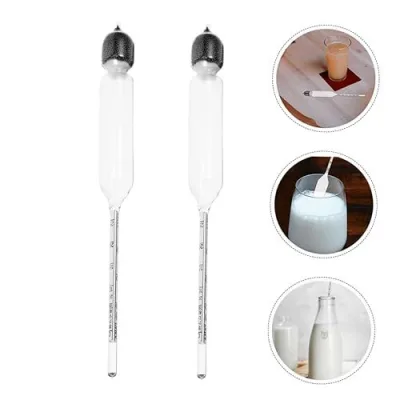
This lactometer functions as a floating glass hydrometer calibrated specifically for milk.
When placed in a milk sample, it floats at a level determined by liquid density. The graduated stem provides a direct density reading, which can be compared against standard reference values to assess milk purity. The weighted bulb ensures stable vertical alignment during measurement, while the narrow stem allows precise reading at the liquid surface. The transparent glass construction enables clear visibility of scale markings.
Milk diluted with water (or milk from a cow with dilute milk)shows a lower density, which is immediately reflected by a deeper float level on the scale.
This direct physical measurement requires no calibration, power source, or adjustment. Readings are repeatable when measurements are taken at recommended temperatures. The simple immersion method minimizes user error and allows quick checks in dairies, collection centers, and inspection routines.
Hygiene Considerations: Regular cleaning is important to prevent contamination and ensure accurate readings.
Start with clean milk in a tall, narrow container. The milk should be still, not foamy, and ideally close to 20°C. Temperature matters because density changes with heat.
Gently lower the lactometer into the milk. Do not drop it. Let it float freely without touching the sides or bottom. Once it stops moving, bring your eye level with the milk surface.
Read the scale at the milk surface, not at the top of the meniscus. That number is the lactometer reading. Wipe the instrument clean immediately after use.
The reality is simple: if the milk temperature is much higher or lower than standard, the reading shifts. That’s why professional checks are done near 20°C or corrected mathematically.
Accepted lactometer readings for milk
For normal, undiluted cow milk, the accepted lactometer range is:
26 to 32 lactometer degrees, often written as L = 26–32
This corresponds to a specific gravity of approximately 1.026 to 1.032.
Here’s how to interpret it in real life:
A reading below 26 strongly indicates added water or low solids. A reading between 26 and 28 is usually acceptable but on the lighter side. A reading between 28 and 32 indicates good milk density and normal composition. A reading above 32 may suggest partial skimming or unusually high solids.
The bottom line
The lactometer doesn’t guess. It measures density, nothing else. It won’t tell you what was added or removed, only that the milk no longer behaves like normal milk should. That’s exactly why it’s still used in routine dairy checks.
Specifications are from the manufacturer. We confirm the details when we call you.
Call or email us and tell us what you keep and how many. We will say whether this one fits your farm or point you to a better size. You are also welcome to come and see it in our Nairobi CBD shop.